Mining
Sublevel caving is the mining method used in LKAB’s mines. The crude ore is loaded to trucks or trains, crushed in a central crushing plant, and then hoisted to surface level for further processing by sorting-, concentrating- and pelletizing plants.
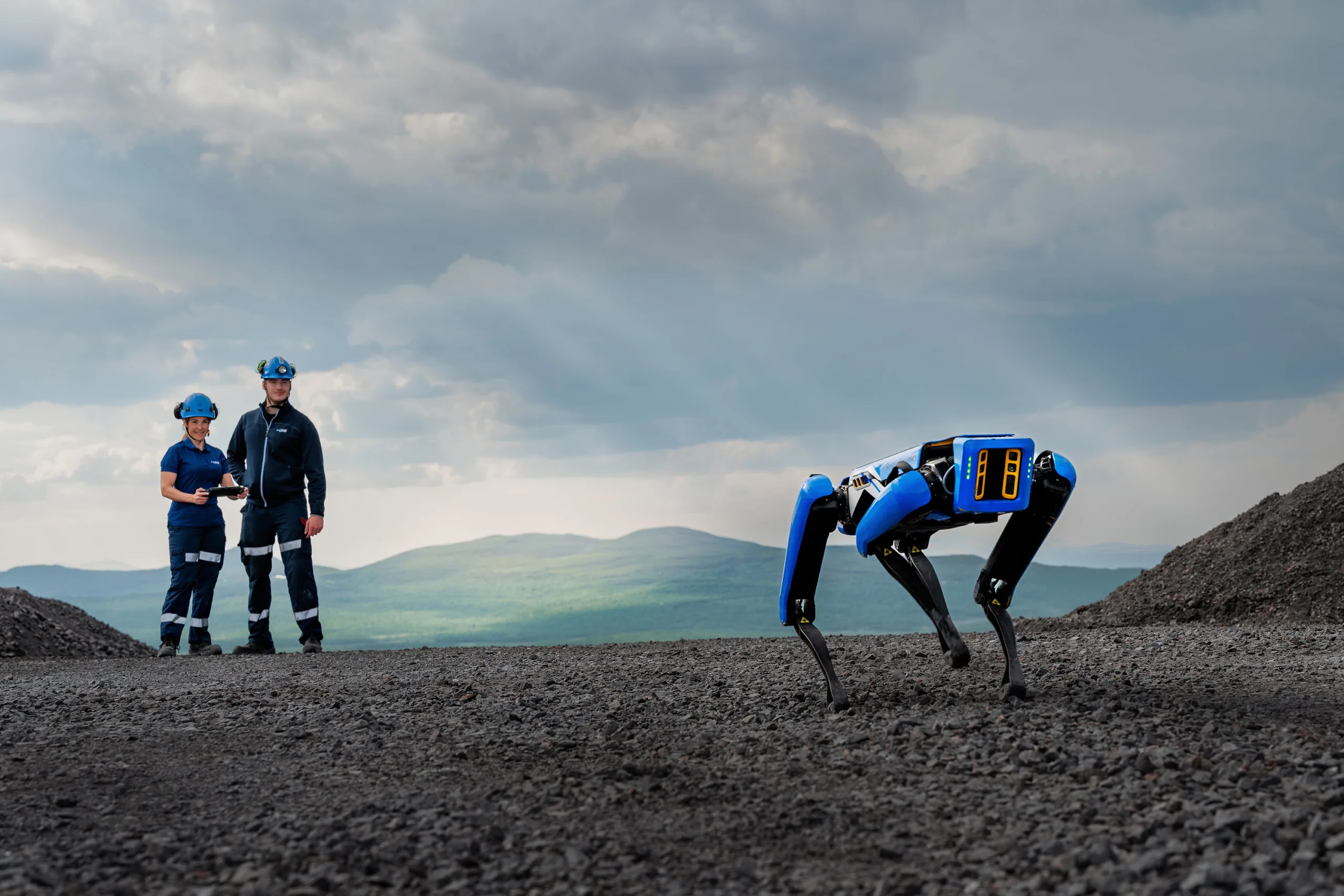
Underground rail transports in Kiruna are remote-controlled, as are some other operations, for example, production drilling and loading. This degree of automation enables greater efficiency in process control.
The orebody in Kiruna is a single, enormous slice of magnetite. It is about four kilometers long, has an average width of 80 meters and extends to an estimated depth of two kilometers. It is inclined at roughly 60 degrees.
The main level is at a depth of 1045 meters below surface level. Mining of the orebody takes place between the 775 and 1045-meter levels. About 26 Mt of crude ore is mined each year.
The Malmberget mine consists of about 20 orebodies, of which ten are currently mined. Most of the deposit consists of magnetite ore, but non-magnetic hematite also occurs. The present main level of the Malmberget mine is at a depth of 1000 meters. About 14 Mt of crude ore is extracted from the orebodies each year.
The first stage of mining is drift development. A drift is a tunnel that is driven into the rock. Development involves construction of new areas of the mine where ore can be extracted. A development project begins with construction documents prepared by the mine planning department. Each year, the mine planning department orders development work on the basis of the forecast demand for products as well as current knowledge of the status of the orebody.
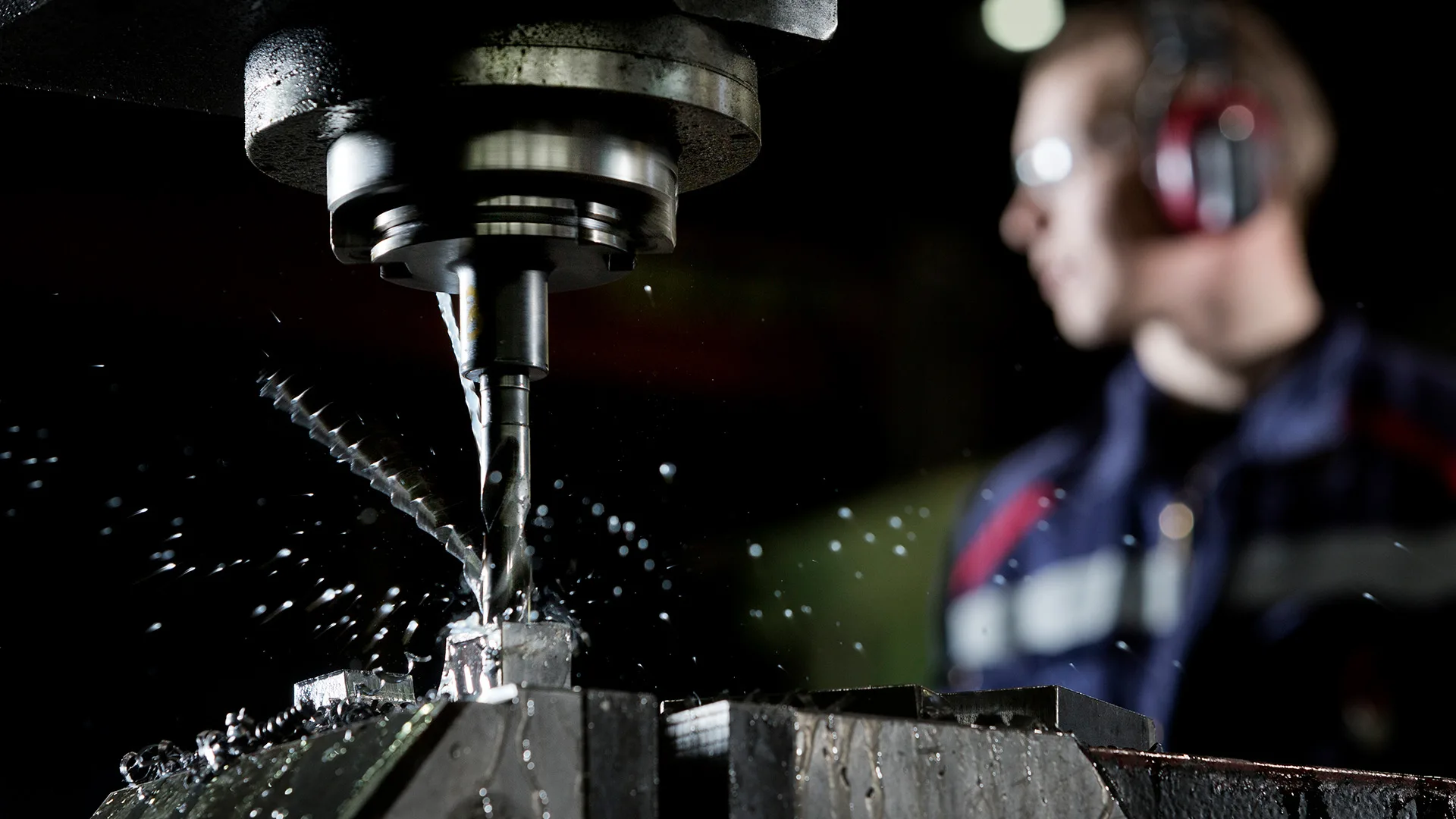
A development drift goes right through the orebody. Drifts are driven with electric-hydraulic drill rigs. For each charge, as many as 60 holes are drilled. Each hole is about 5 meters deep. When all the holes are drilled, they are charged with explosives.
The charge is blasted at night. The loose ore is then hauled out by a front loader. This procedure is repeated until the entire development drift has been driven. The drifts can be up to 80 meters long. If necessary, the walls and ceiling of the drift are reinforced with rock bolts and/or shotcrete.
When development is complete, i.e., when several drifts have been driven in the same area, the next stage of mining can begin; namely, production drilling.
Slices of ore are drilled up with remote-controlled production drilling rigs. From their control rooms, the operators (drillers) operate several drill rigs out in the production areas via remote control.
The rig drills upwards into the ore, forming fan-shaped patterns of holes. There are 10 drill holes in each series. They are normally about 40-45 meters deep. The holes are straight, so that subsequent charging with explosive and blasting can be done efficiently. When a pattern of holes has been drilled, the rig is moved back three meters, then drilling of the next pattern begins. About 20 of these patterns will be drilled in an 80-meter drift. Once drilling is completed in the entire drift, the holes can charged with explosive.
A robot injects explosive into the drill holes in one pattern. The explosive is manufactured by LKAB’s own explosives company. Blasting is done every night. Each round brings down about 10,000 tonnes of ore.
When the blast has been ventilated, loading with wheeled loaders can begin. Then, the next pattern is charged, etc. The procedure is repeated until the entire drift has been mined out.
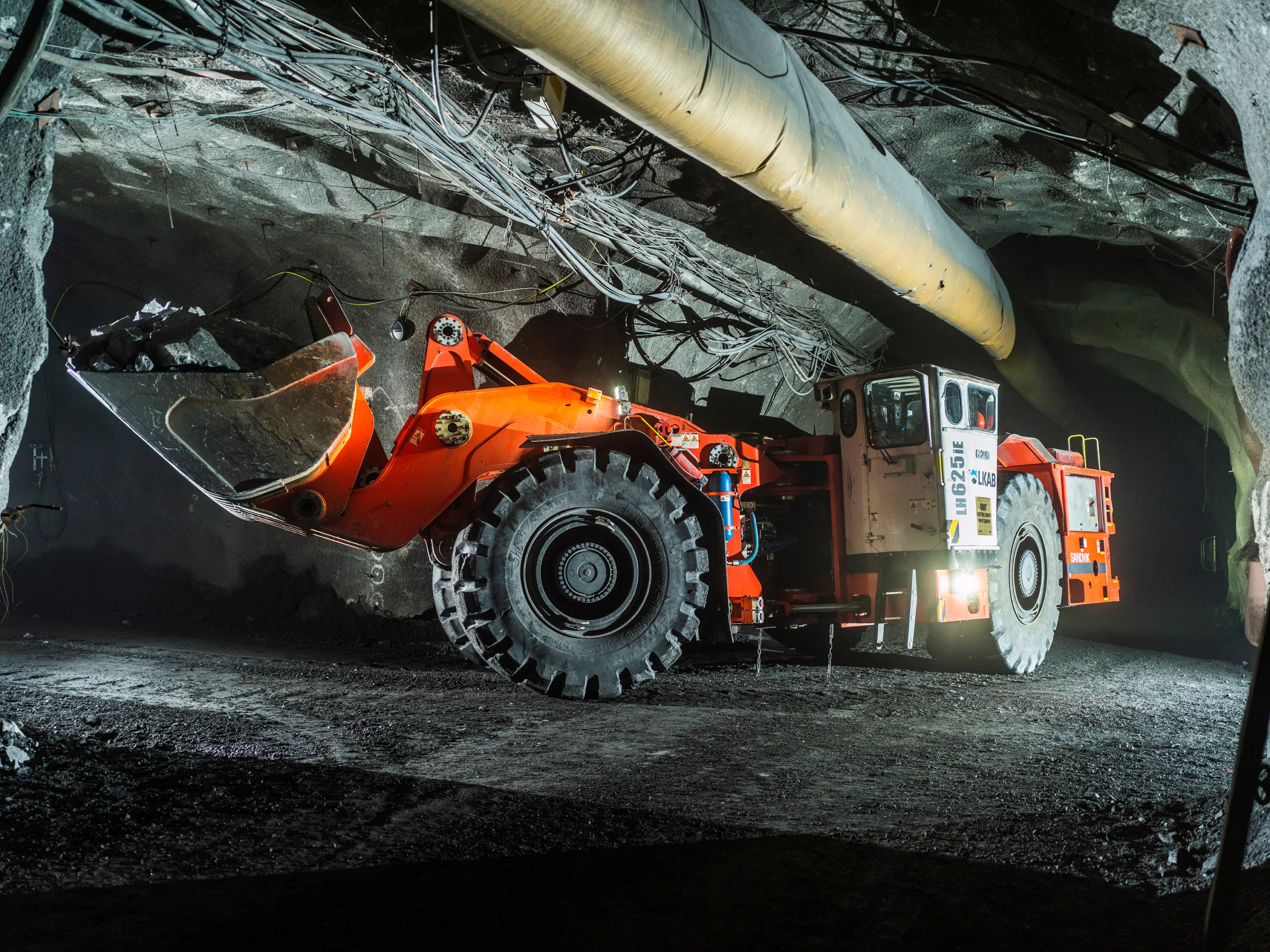
Electric wheeled loaders load and carry the ore to vertical shafts (ore passes) located along the orebody. Each loader carries a bucket payload of 17-25 tonnes and tips its load down an orepass. By gravity, the ore falls down to bins located just above the main level.
In the Kiruna mine there are also electric loaders which are remote-controlled. The operator sits in front of monitors, in a control room, and 'drives' the machines in the production area. The machines navigate with the help of rotating lasers and reflectors on the walls of the drifts. Information, e.g., the position of the machine, is sent via a number of wireless base stations to the control system in the control room computer.
Kiruna
The main level is at a depth of 1045 meters below surface level. Ore is tapped via remote control from the bins into railway cars. Driverless trains, consisting of an engine and 24 cars, haul the ore to one of four discharge stations.
When the trains pass the station, the bottoms of the cars open, the ore falls down into a crusher bin and is then fed to one of four crushers. The ore is crushed into lumps of about 100 mm in diameter. Nine locomotives and about 185 cars are operated on the main level. Each train carries about 500 tonnes of ore.
Malmberget
Mining in Malmberget takes place at several different levels, since there are many orebodies. The main haulage levels are at 600, 815 and 1000 meters. There are crushers at each level. 12 huge mine trucks, with payload capacities of 70 to 120 tonnes, are operated at these levels. The trucks are driven to vertical shafts. Drivers control loading from inside the cab of the truck.
The fully-loaded truck is then driven to a discharge station and the ore is emptied into a crusher bin. The trucks are emptied sideways. This is also controlled from the cab of the truck. The ore is fed into the crusher and crushed into lumps of about 100 mm in diameter.
When the ore has been crushed it is carried by a belt conveyor to the ore elevators (skips). The ore is loaded to the skip automatically and hoisted, at a speed of 17 meters per second, up to processing plants at the surface. Each skip carries 40 tonnes of ore.
In the Kiruna mine, hoisting is done in two stages: first, via one of four skips to level 775, where it is transferred and then carried up to the processing plants in one of six skips.
In Malmberget, another method is used, since there are many orebodies.
From main level 1000, the crushed ore is hauled by a 1.7-km-long conveyor to a skip shaft at the 815-meter level. From there, the ore is lifted to the surface by two skips. Final transport to the processing plants is via belt conveyor. There is also a crusher and hoisting station at level 600, for ore mined in the Western field, where there is also hematite ore.
In both Kiruna and Malmberget, crushing and hoisting are monitored and controlled from control rooms.